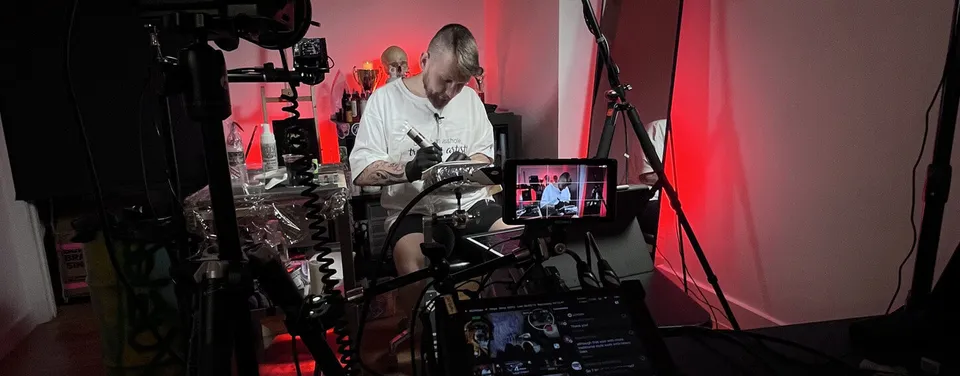
I’m self-taught. I had no traditional apprenticeship and learned from books, magazines, and occasional advice from more experienced artists. Since then, I have judged tattoo competitions and become a member of the Eternal Ink Pro Team with the Levgen Signature Series, my 12-color set.
My first time teaching colleagues in public was a tattoo masterclass at Kyiv Tattoo Collection in 2017. It took me about two months to prepare. The group was fifteen people, and the session lasted thirteen hours.
Before the practice, I went over the basics of color theory, the rules for mixing pigments, and classic color combinations. For the live demonstration, I made a realistic color portrait of a girl with a butterfly and glowing wings.
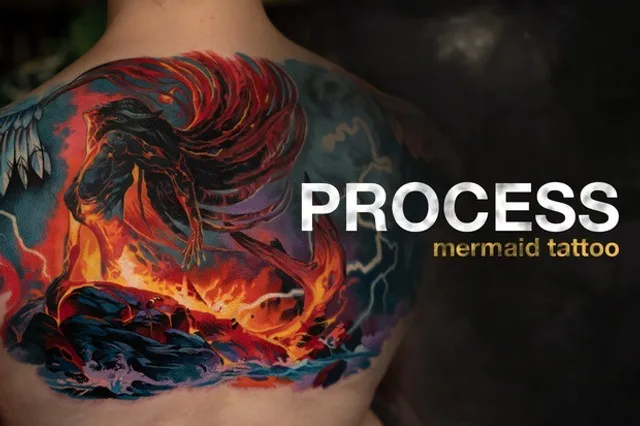
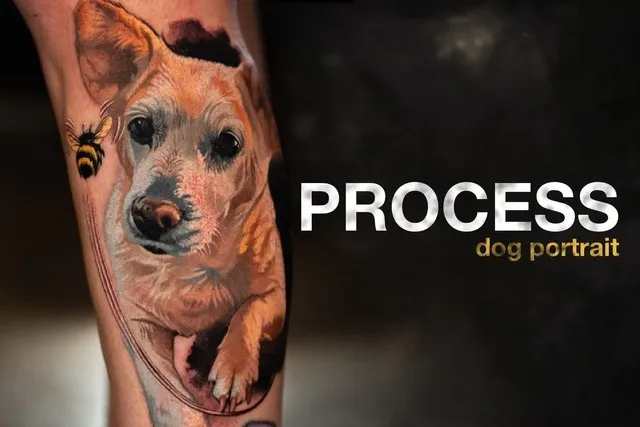
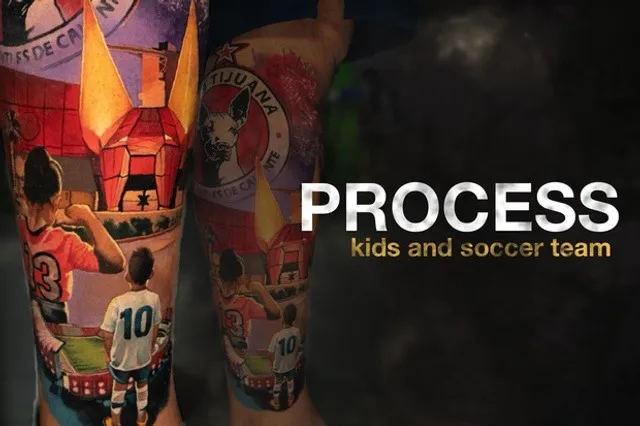
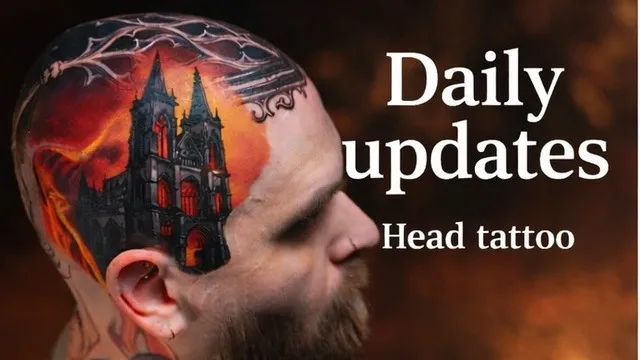
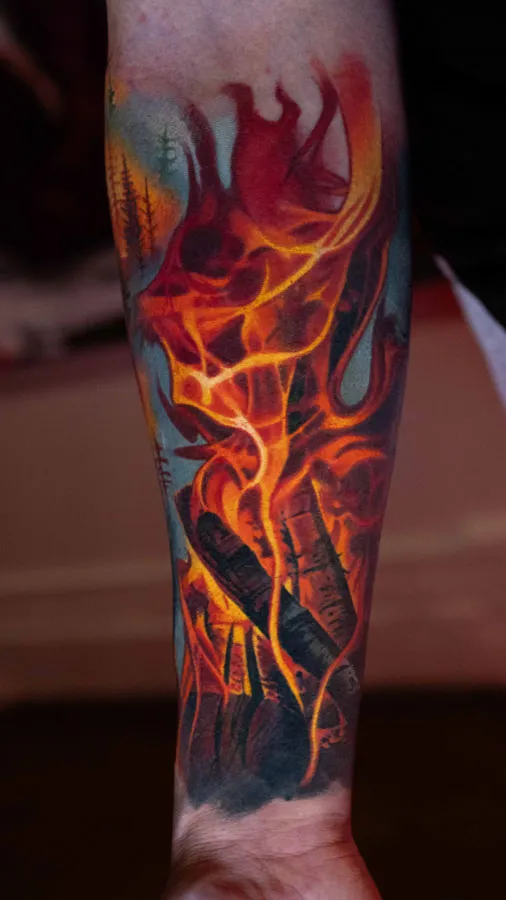
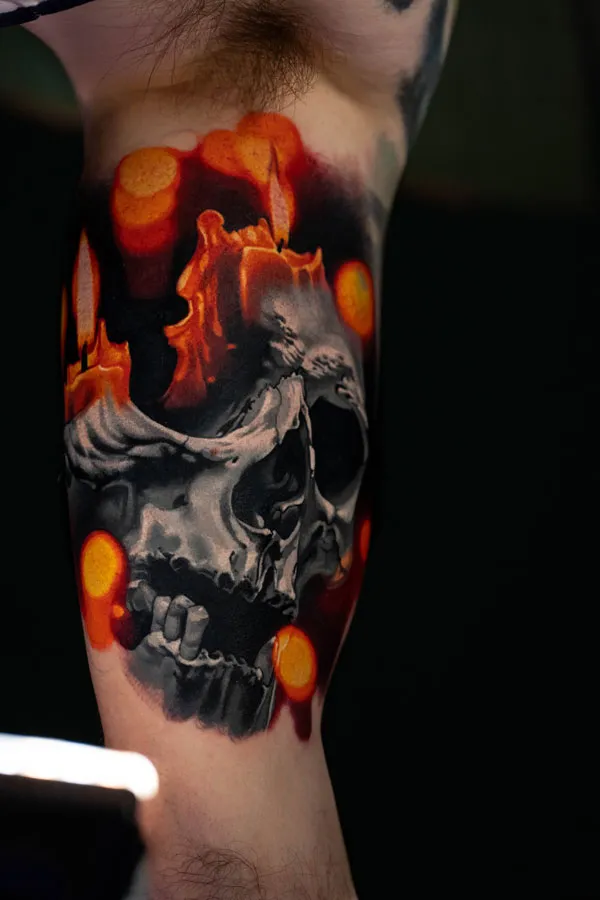
In my own work, a realism tattoo starts before I open the iPad. I imagine the composition for a few hours or even days, then move to Procreate, my main workspace, and make the design follow the anatomy. Contrast is everything here, since we rarely use outlines in realism.
For a color tattoo, thirty to thirty-five colors are enough for me, whatever the project. A difficult pigment like magenta isn’t a reason to avoid the color. You need a technique that works for it, or the same shade from a different brand.
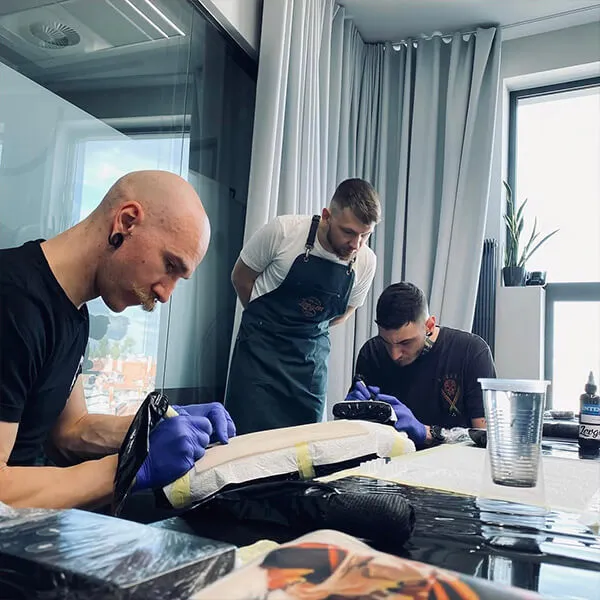
On skin, I work in sections and fill an area completely before moving on, so I avoid going back over packed skin. I often start with a 9 Soft Edge Magnum for soft blending, using water for smooth transitions. Then I take a Round Shader to get close to the outlines and pack color in detailed areas.